


Work-related stress takes a toll on your health and well-being. Not only does it affect how you think, feel, and perform on the job, stress often leads to frustration, headaches, poor sleep, and difficulty concentrating. Taking steps to manage stress can improve your productivity at work while reducing the risk of accidents and injuries.
Symptoms of work-related stress
Everyone reacts to stress differently. The way you respond depends on your personality, the coping mechanisms you’ve learned, and the culture of your workplace.
In general, stress activates the body’s fight-or-flight response, releasing hormones that raise your heart rate and blood pressure. The physical and emotional symptoms of job stress include:
- Headaches
- Upset stomach
- Insomnia
- Inability to concentrate
- Mood swings
- Panic attacks
- Depression
- Anxiety
- High blood pressure
When you’re under stress and not thinking clearly, you are more likely to make mistakes. Learning how to cope with workplace stress can benefit your professional life and emotional well-being.
Here are 12 stress management tips to help you stay focused at work:
Track your stressors
Identify situations that create stress at work and pay attention to how you feel. Do you experience stress in particular settings or with certain people? How do you respond?
Finding patterns among your stressors can help you develop positive reactions and coping mechanisms.
Causes of job stress include:
- Excessive workload
- Tight deadlines
- Long commute
- Lack of work-life balance
- Difficult coworkers
- Ineffective managers
- Job insecurity
- Lack of support
- Uncomfortable workspace
- Lack of development opportunities
- Low morale
In some cases, the job doesn’t create stress. Rather, the way you respond to the pressures and demands of your workplace makes you feel stressed out.
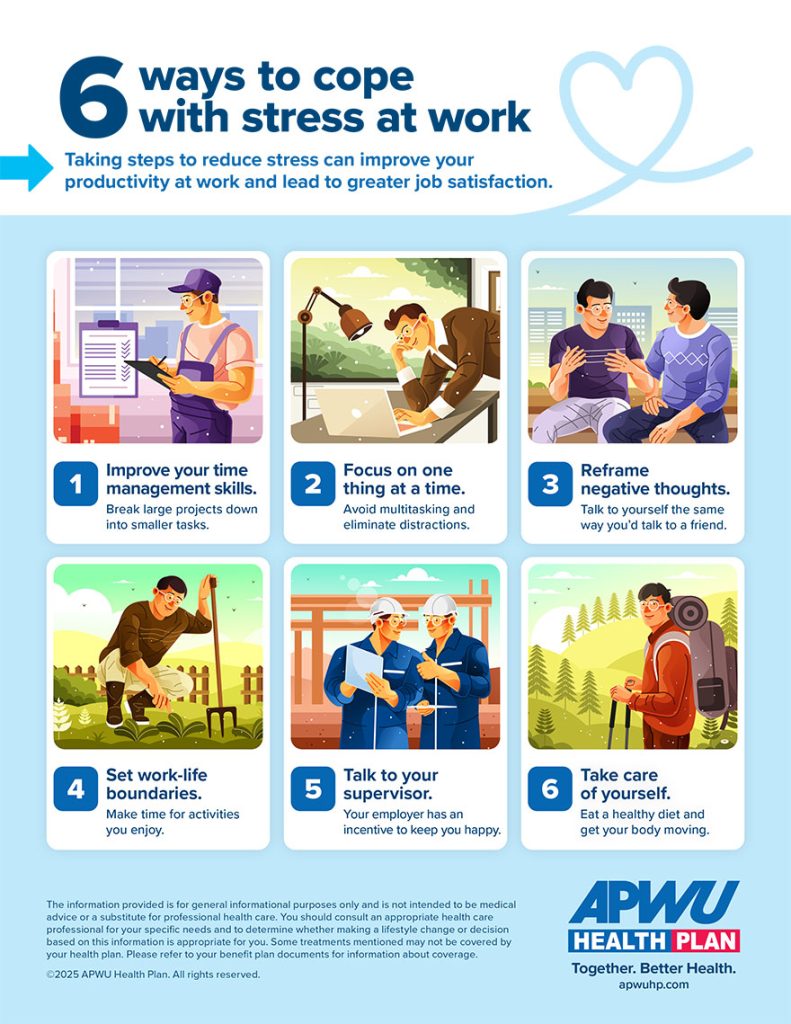
Improve your time management skills
If you feel overwhelmed at work, setting priorities, taking steps to improve your time management skills, and learning how to delegate responsibilities will go a long way toward reducing stress.
Work with your manager to set deadlines you can meet. Regular progress reviews will help you stay on track.
Make a to-do list so you can enjoy the satisfaction of checking items off as you complete them.
If you’re working on a large project, break it down into smaller tasks and block out time to work without interruption. Be realistic and avoid taking on more than you can handle.
Focus on one thing at a time
While some may believe multitasking is the key to staying productive, focusing on one thing at a time is a more effective way to get work done. It helps reduce stress and fuels your power to concentrate.
As Latin playwright and philosopher Publilius Syrus said, “To do two things at once is to do neither.”
Embrace challenges and reframe negative thoughts
While you can’t control every aspect of your job, you have the power to view challenges as opportunities to learn new skills and face demanding situations in a way that helps you build resilience.
What you tell yourself about a stressful situation plays a huge role in how you feel and how you react. In high-pressure situations, our thoughts often add to the stress we feel. We imagine a worse outcome than is likely.
Work-related stress can spark unkind thoughts and unleash a critical inner voice. Listen to the messages you send yourself. Would talk to a friend that way?
Try to adopt the same supportive tone with your inner voice that you would use when talking to a friend.
Talk to your supervisor
Job stress tends to reduce your productivity at work, so your company has an incentive to create an environment that promotes your well-being.
Talk with your supervisor to develop a plan for managing sources of stress. It may seem counterintuitive, but in some cases taking on more responsibility can enrich your job with more meaningful tasks.
Disconnect from work at the end of the day
After a long day, take time to rest and recharge. Set aside time for activities you enjoy, such as cooking, playing pickleball, reading, or pursuing a hobby.
Laughter reduces stress by producing positive physical changes in the body, so get together with friends and watch a comedy or tell some jokes. A good sense of humor can help you maintain a healthy perspective on the ups and downs of life.
Music is a good distraction that lowers stress hormones. Turn up the volume and dance.
Make time for hobbies and activities you enjoy, like going out with friends or taking the dog for a walk.
Looking for more ideas? Discover fun ways to relieve stress.
Set work-life boundaries
As remote work has become more common, you may feel pressured to be available beyond traditional office hours. Take care of yourself by setting healthy boundaries and learning how to say no.
You can’t do everything for everyone in your life. In fact, trying to do too much leads to stress and resentment.
Make a rule to not check email in the evening or on the weekends. And don’t answer the phone during meals.
More important, use the vacation you’ve earned to get away from work and take time off to relax and unwind with family and friends.
Take time to recharge
We all need to disconnect from time to time. When you’re away from work try not to think about work. Take a break from your smartphone and focus on the world and people around you.
Getting away from your job and making time for yourself, even for just a day or two, can help you avoid burnout and return to work feeling revitalized and ready to perform.
Practice relaxation techniques
Taking regular breaks throughout the workday will help you stay energized and focused. If you only have a few minutes, find a quiet place where you can sit in a comfortable chair, close your eyes, and relax.
Other relaxation techniques involve more time, but you can practice them almost anywhere and at any time. These activities will give you a sense of calm that improves your emotional well-being.
- Deep breathing: Inhale through your nose and exhale through your mouth.
- Muscle relaxation: Tighten and release each muscle group in your body while you breathe gently.
- Guided imagery: Breathe deeply as you visualize a favorite place and pay attention to what you see, feel, hear, smell, and taste.
- Mindfulness meditation: The goal is to be fully engaged in the present moment.
- Yoga: This ancient practice combines physical movement and breathing in a way that calms your body and mind.
Connect and communicate with others
If job stress feels like it’s taking over your life, talk with a trusted friend or family member about the issues you’re facing at work. Connecting with others can help you put things into perspective and explore solutions.
Taking proactive steps to manage stress will lead to better job satisfaction and an improved work-life balance.
It’s also important to build a social network at work. Friendships don’t need to extend beyond office hours, but having the support of your colleagues can make your job more enjoyable.
Prioritize self-care
When you take care of yourself, you’re less likely to feel overwhelmed and better able to handle pressure. Healthy eating, regular physical activity, getting enough sleep, and avoiding unhealthy habits will help keep your body and mind in balance so you’ll be more productive at work.
Eat a healthy diet
Healthy eating starts with finding ways to add more fruits and vegetables to your diet. Whole grains and lean proteins are good, too.
Avoid junk food and ultra processed foods loaded with sugar or fat. Packing your lunches instead of eating out saves money and lets you control what you eat.
Get moving
One of the best ways to reduce stress is to get your body moving.Exercise stimulates blood flow and releases feel-good endorphins in your brain. Any form of physical activity will boost your sense of well-being.
Even if you haven’t been active for a while or are out of shape, moving your body is a good stress reliever. Invite a coworker to go for a short walk, or discover ways to exercise in a chair.
Too busy to exercise? Find ways to sneak physical activity into your day.
Get the sleep you need
Getting enough good-quality sleep gives your brain and body a chance to recharge. Most adults need about seven to nine hours of sleep each night.
Lack of sleep can reduce your energy level, affect your mood, and make it difficult to concentrate. If possible, try to maintain a consistent sleep schedule seven days a week.
Avoid unhealthy habits
Drinking too alcohol or smoking tobacco can harm your health and increase your stress levels.
See a therapist if you need support
If stress prevents you from functioning at work or enjoy daily activities, consider talking to a professional counselor. Check to see if your employer offers stress management resources through an employee assistance program.
Your health plan may also offer virtual behavioral health visits and access to counseling with a mental health professional.
Being more productive at work starts with taking care of yourself
People whose job provides a sense of purpose or satisfaction tend to be happier.
Cultivating optimism and a sense of gratitude can lead to improved heart and brain health, while making positive changes will help you feel more in control of your health and well-being.
Additional sources
- American Psychological Association, Coping with stress at work
- Mayo Clinic, Stress relievers: Tips to tame stress
- Vanderbilt University, 10 stress management tips to stay focused at work