


It’s hard to lose weight. All too often the New Year’s resolutions we make to prioritize healthy eating cave under the pressure of comfort food cravings, busy schedules, and the stress of everyday life.
Fad diets that promise fast weight loss may sound like the answer, but you’re more likely to lose weight and keep it off when you set specific, personalized goals you can achieve and introduce lifestyle changes gradually. The key to sustainable weight loss is to take your time and find an approach that keeps you motivated and makes you feel good.
What is the best diet for weight loss?
Rather than thinking of a diet as temporarily changing what you eat, losing weight and keeping it off requires a permanent shift toward healthier eating habits.
If you go on a diet for a while until you lose weight, and then return to your old ways of eating, you’re likely to regain the weight you lost.
A healthy diet focuses on natural, wholesome foods over processed, packaged meals and snacks. It emphasizes plant-based foods that provide you with the nutrients you need to concentrate, stay energized, boost your immune system, and function at your best. It also incorporates protein and healthy fats from fish, olive oil, and other plant-based oils, while being low in sugar and salt.
The most important thing to remember is that the best diet is the one you’ll stick with in the long run.
What is a healthy diet?
While there is no single diet that’s right for everyone, people around the world have adopted different eating styles for optimal health. These diets have something in common: They tend to be plant-based with an emphasis on natural foods and healthy fats instead of the processed meals we eat in the West.
The Mediterranean diet emphasizes fruits, vegetables, legumes, nuts, and whole grains while containing moderate amounts of yogurt, cheese, poultry, and fish. Olive oil is the primary cooking fat. In addition to being effective for weight loss, the Mediterranean diet can lower the risk of heart disease, diabetes, depression, and some forms of cancer.
The DASH diet (dietary approaches to stop hypertension) is a heart-healthy eating plan that seeks to lower blood pressure and decrease the risk of heart disease. Similar the Mediterranean diet, it emphasizes vegetables, fruits, whole grains, fish, poultry, nuts, and olive oil.
Whether or not you follow a specific diet plan, inspire yourself to make healthy choices with creative ways to add more fruits and veggies to your diet.
Focus on whole foods
Many ultra-processed foods like frozen pizza, potato chips, and sausage are high in sodium and saturated fat, while others are loaded with added sugars and artificial flavors. They amount to nothing more than empty calories that keep you craving more.
Both the Mediterranean diet and DASH diet highlight the importance of eating whole foods, including fresh fruits and vegetables, nuts and seeds, legumes, and whole grains.
When you buy bread, rice, pasta, or cereal, choose whole grains instead of refined grains. Whole grains include whole-wheat bread, oatmeal, quinoa, and brown rice. Refined grains like white bread, white rice, cakes, and crackers have been processed in a way that removes most of the fiber and many nutrients.
Simple proteins such as plain yogurt, eggs, fish, and skinless chicken are also a great addition to your diet when you’re trying to lose weight.
Add more fiber to your diet
Fiber slows digestion and is good for your heart. It also helps you feel satisfied longer, so you’ll eat less and reduce the total number of calories you consume.
Fruits and vegetables are excellent sources of fiber, so make it a goal to fill half of your plate with colorful produce at every meal. Eating more plant-based foods, including fruits, vegetables, and whole grains, can help you lose weight.
Discover tips for adding more fiber to your diet.
Strategies to help you lose weight
Combining the basic principles of a healthy diet with strategies for weight-loss success can help you achieve your goals.
Make a meal plan. When you’re busy, planning ahead makes healthy eating convenient and reduces the chance that you’ll just grab some fast food.
Start a habit of making a grocery list. Don’t wait until you’re hungry to decide what to eat. Planning meals and going shopping when you feel full makes it easier to resist unhealthy options.
Read nutrition labels. Before you buy anything at the grocery store, read the nutrition label and list of ingredients. Learn how to spot hidden added sugars and choose products with lower sodium and saturated fat.
Practice portion control. One of the easiest ways to cut back on calories is to simply use smaller plates and dishes. You’ll eat less without even noticing it.
And always eat off dishes. Eating straight out of a container can cause you to overeat.
Limit added sugars. Sweetened beverages and desserts are packed with empty calories that offer little to no nutritional value.
Choose plain water, unsweetened tea, black coffee, or unsweetened soy milk instead of sugary beverages.
Stay hydrated. Drinking a glass of water before each meal can help control hunger and reduce the number of calories you eat. Staying hydrated also supports digestion.
Practice mindful eating. Slow down when you eat and chew each bite thoroughly. Focus on the flavors and textures.
Most important, avoid using your phone or watching TV during meals as you’re likely to become distracted. Paying attention to your body’s fullness signals can prevent overeating.
Choose healthier alternatives when you crave junk food
When you’re trying to lose weight, it can be incredibly difficult to resist your favorite sweets or salty snacks. Having a plan for what to do when junk food cravings hit can help you avoid consuming empty calories and keep your diet on track.
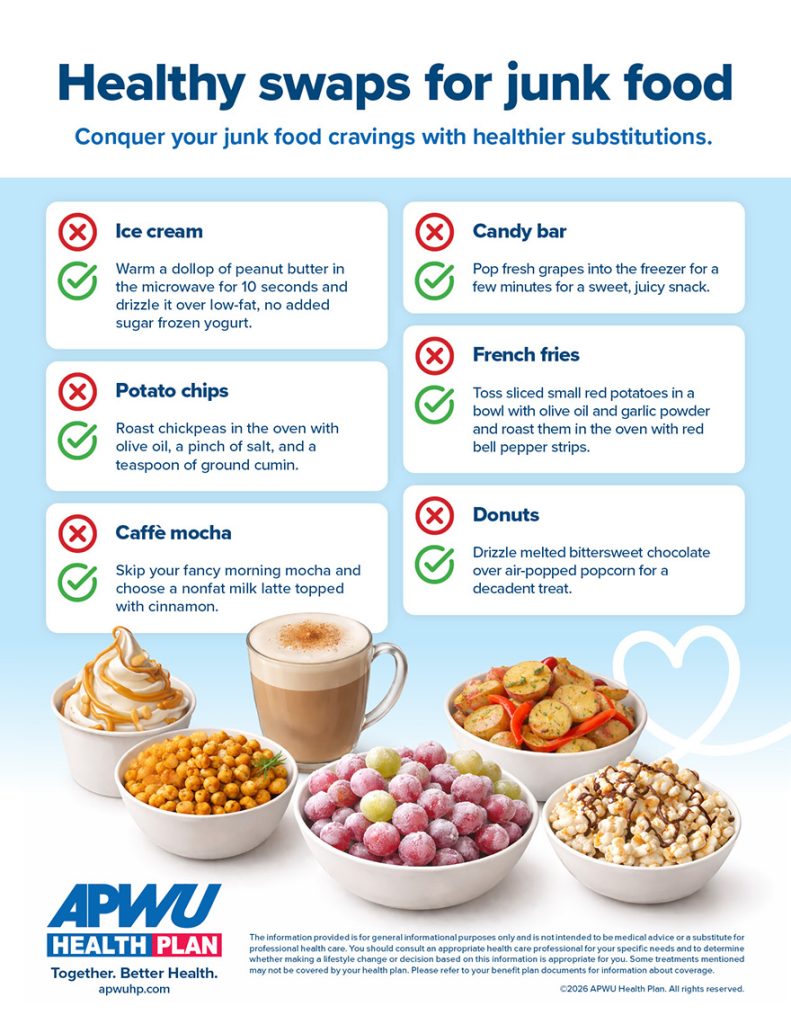
Ice cream: If you crave something creamy and sweet, warm a dollop of peanut butter in the microwave for 10 seconds and drizzle it over low-fat, no added sugar frozen yogurt.
Potato chips: The crunchy texture of potato chips is hard to resist, but salty snacks are often loaded with saturated fat. Roast chickpeas in the oven with olive oil, a pinch of salt, and a teaspoon of ground cumin.
Caffè mocha: Sweetened beverages and coffee drinks contain a lot of empty calories. Skip your fancy morning mocha and choose a small latte made with nonfat milk and topped with cinnamon. Or quench your thirst by adding lemon slices to a glass of ice-cold sparkling water or club soda.
Candy bar: Skip the vending machine and reach for some fruit. For a sweet, juicy snack, pop fresh grapes into the freezer for a few minutes.
French fries: French fries may hit the spot, but they come with a lot of sodium, saturated fat, and calories. Toss sliced small red potatoes in a bowl with a little olive oil and garlic powder and roast them in the oven. For an even healthier twist, add some carrots and red bell pepper strips.
Donuts: Drizzle melted bittersweet chocolate over air-popped popcorn for a decadent treat.
Looking for more ideas? Discover healthy snacks you can eat without gaining weight and 10 high-protein, low-calorie snacks that keep you full.
Healthy eating can help you lose weight for good
Sustainable weight loss comes from healthy habits you can maintain over time, not fad diets or trendy fasts. You don’t have to be perfect to lose weight. Start by making a few small changes and see what works for you.
If you experience cravings or begin to doubt yourself, remind yourself of the health benefits of losing just five pounds.