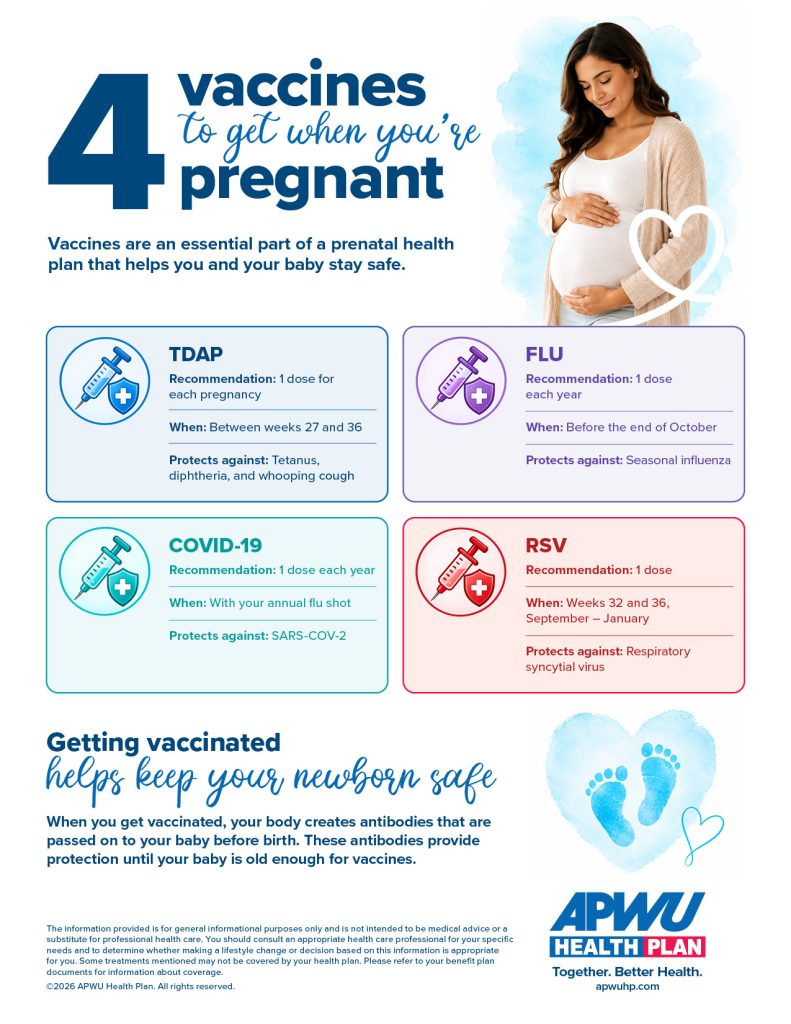



Having a baby is a joyful and exciting time that also comes with many challenges and questions. Whether you’re planning a pregnancy or already expecting, taking care of your health is more important than ever. Vaccines are an essential part of a prenatal health plan that can help you and your baby stay safe. The antibodies you develop in response to vaccines cross the placenta and help protect your baby from serious diseases early in life.
If you’re becoming a mom, talk with your doctor about getting up to date on all your vaccines. Getting vaccinated is the safest way to help protect your baby and yourself from preventable diseases.
Vaccines to get when you’re pregnant
Tdap vaccine
A single dose of the Tdap vaccine protects you and your baby against three serious diseases:
For a newborn, whooping cough can be life-threatening. Some babies with whooping cough may stop breathing and turn blue. However, babies younger than two months of age are too young to receive the Tdap vaccine.
Getting the vaccine early in the third trimester of your pregnancy, between weeks 27 and 36, allows your body to create antibodies that give your baby short-term, early protection against whooping cough after they’re born.
Even if you already received the Tdap vaccine, getting a booster when you’re pregnant can help protect your baby.
Family members and caregivers who will be in close contact with your baby after birth should also get a Tdap booster.
Flu vaccine
Due to changes in the immune system, pregnancy increases your risk for complications from flu and can lead to hospitalization. If you plan to be pregnant during the fall or winter, it’s best to receive the flu vaccine before the end of October. However, getting vaccinated later can also be beneficial.
You will receive the injected form of the vaccine, not the nasal form that contains a live virus. Scientific evidence shows that the flu shot is safe when you’re pregnant.
Vaccination will help make sure you’re protected during peak flu season. You’ll also protect your baby for several months after birth.
Babies can’t get a flu vaccine until age six months or older. That’s why it’s important to make sure everyone who will be in close contact with your newborn is vaccinated.
COVID-19 vaccine
When you’re pregnant, getting infected with COVID-19 can make you very sick. You’re also more likely to experience preterm birth, so it’s important to stay up to date on COVID-19 vaccines.
The American College of Obstetricians and Gynecologists recommends getting vaccinated against COVID-19 during your pregnancy.
Getting vaccinated lowers your risk of ending up in the hospital and passes along protective antibodies that can reduce your newborn’s risk of getting COVID-19 after delivery.
RSV vaccine
Respiratory syncytial virus (RSV) is often associated with mild, cold-like symptoms, but an infection can cause serious breathing problems. It’s also the most common reason infants under one year of age need to be hospitalized in the U.S.
If your baby will be born during RSV season, which runs September through January, the American College of Obstetricians and Gynecologists recommends that you can get the vaccine between weeks 32 and 36 of your pregnancy.
When you get vaccinated, your baby receives antibodies that offer protection for six months.
You only need to get the RSV vaccine once. If you get pregnant again in the future, you don’t need another dose.
Ask your doctor if you need other vaccines when you’re pregnant
Depending on your age, risk factors, and immunization history, your doctor may recommend several vaccines before, during, or after pregnancy.
Review your vaccine record with your doctor before you get pregnant. Not getting recommended vaccines before pregnancy can leave you vulnerable to dangerous infections that can increase the risk of miscarriage, preterm delivery, or birth defects.
If you’re already expecting, your doctor can recommend a schedule for catch-up doses after you deliver.
Vaccinates you may need include:
- Hepatitis B if you’re at risk of exposure
- Hepatitis A if you have a history of chronic liver disease
- Pneumococcal if you have an increased risk of severe illness
- Meningococcal if you work in a lab or are traveling to certain countries
If you plan to travel outside the U.S. while pregnant, find out which infectious diseases are common in the countries you will visit. It’s usually safe to travel when pregnant, but talk to your doctor well in advance of your departure.
Safety of vaccines during pregnancy
Health experts base vaccine recommendations on extensive research and develop them with the greatest concern for you and your baby.
When you’re pregnant, you should not receive any vaccine that contains a weakened version of a live virus as these vaccines could cross the placenta be harmful to your baby.
If you plan to get pregnant, wait four weeks after receiving a live-virus vaccine.
Vaccines to avoid during pregnancy include:
- Human papillomavirus (HPV) vaccine
- Measles, mumps, and rubella (MMR) vaccine
- Nasal spray flu vaccine
- Chickenpox (varicella) vaccine
- Certain travel vaccines: yellow fever, typhoid fever, and Japanese encephalitis
Rubella, sometimes called German measles, is very dangerous for you and your developing baby, so be sure to get the MMR vaccine before your become pregnant.
If you get infected with rubella when you’re pregnant, you can pass the virus to your baby, which can lead to an infant born with the congenital rubella syndrome (CRS). CRS can cause heart problems, loss of hearing and eyesight, intellectual disability, and liver or spleen damage.
Getting vaccinated helps keep your newborn safe
The vaccines you receive during pregnancy protect you and provide your newborn with immunity that lasts for a few months. When you get vaccinated, your body creates antibodies that are passed on to your baby before birth. These antibodies help provide protection until your baby is old enough to get vaccinated. It’s also important for caregivers and family members to be up to date on all immunizations during your pregnancy and after your baby arrives.
Additional sources
Mayo Clinic, Vaccines during pregnancy: Are they safe?
American Academy of Pediatrics, Vaccines During Pregnancy: Keeping You & Your Baby Healthy