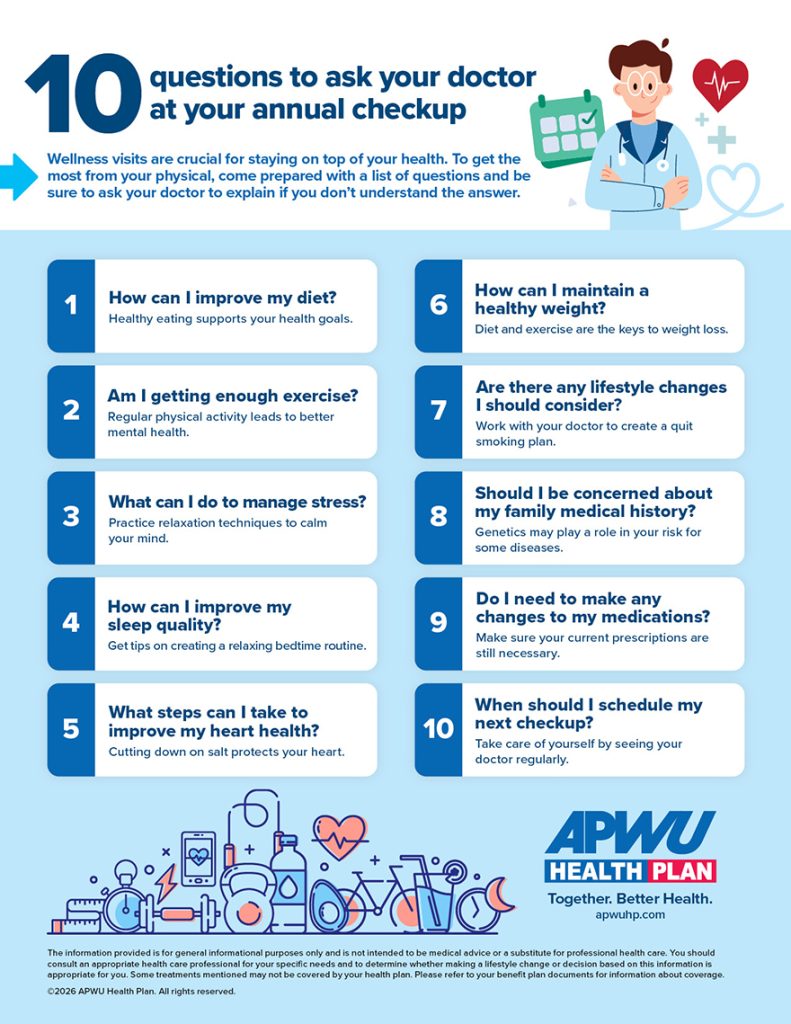



If you don’t have any medical issues, you may be tempted to skip your annual wellness exam, but regular checkups are essential to your health. Visiting your primary care provider for routine preventive care is one of the best ways to identify health issues early, when treatment is more likely to be successful. These visits also give you a chance to ask questions about your physical health and emotional well-being.
What is an annual checkup?
An annual checkup—also known as an annual wellness exam, physical exam, yearly checkup, or well-care visit—is a preventive care appointment to assess your overall health. It usually involves seeing a primary care provider in family medicine or internal medicine and takes about 30 minutes to complete.
Over time, annual checkups give you an opportunity to build a relationship with your primary care provider and play an active role in supporting your health.
If you’re concerned about out-of-pocket costs, most health plans provide 100 percent coverage for an annual wellness exam. Review your insurance benefits before your checkup so you know what is and is not covered.
Before you schedule your appointment, review our annual physical exam checklist for adults.
What happens during an annual checkup?
During a physical exam, your primary care provider will focus on five important tasks:
- Assess your overall health
Depending on your age, lifestyle, family history, and risk factors for diseases, your provider may order blood tests and other screenings during your annual physical exam. These tests can identify underlying medical conditions, such as diabetes or heart disease, even if you have no symptoms.
It’s important to note that some blood tests count as preventive care, while others are considered diagnostic care. Understanding the difference can help you make informed decisions about your health.
In addition to blood work, your provider may perform a blood pressure screening to measure the force of your blood against your arteries. A reading lower than 120/80 is considered healthy.
A cholesterol screening and blood glucose screening can determine if your numbers are within the healthy range:
- Total cholesterol of lower than 200 mg/dL
- LDL (or “bad” cholesterol) of less than 130 mg/dL
- HDL (or “good” cholesterol) of more than 60 mg/dL
- A1C reading of less than 5.7 percent
In some cases, your provider may order a body mass index (BMI) calculation or osteoporosis screening to measure bone density.
Your test results allow your provider to recommend changes you can make to your diet and lifestyle to maintain or improve your health.
- Update your medical records
During your exam, let your provider know about any changes to your health, including allergies or new symptoms. Also, be sure to mention family members who have developed new health conditions.
Bring a list current prescription medications, vitamins, supplements, and over-the-counter medications you take, along with dosage information.
To help you make healthy lifestyle choices, your provider may ask if you smoke, drink alcohol, or are sexually active.
If you have concerns about your mental health, including depression or anxiety, be sure to let your provider know. Adopting healthy habits may reduce your risk of depression.
- Update your vaccinations
A review of your vaccination history is a key part of your annual physical exam. Your provider may recommend updating certain vaccines:
• Adults should get a Tdap vaccine booster shot every 10 years. This vaccine protects against tetanus, diphtheria, and acellular pertussis (or whooping cough).
• The HPV vaccine protects against cancer caused by human papillomavirus. Anyone up to age 26 and adults ages 27 to 45 who haven’t received the vaccine may benefit from a catch-up vaccine.
• If you have diabetes or a condition that affects your immune system, or if you live or work in certain settings, your doctor may recommend the hepatitis B vaccine.
• Most adults age 50 and older should get the shingles vaccine. The Shingrix vaccine is given as a shot into the upper arm and requires two doses, administered two to six months apart.
• If you have asthma, smoke, or are age 50+, you may need the pneumococcal vaccine to prevent lung infections.
• The RSV vaccine can help prevent lower respiratory tract disease caused by respiratory syncytial virus (RSV). Health experts recommend the vaccine for adults ages 50 to 74 who are at increased risk for severe RSV and all adults ages 75+.
Your provider will also recommend that you get an annual flu shot before influenza season begins. The best time to get a flu shot is in September or October, but it’s never too late to get one. Life is busy, so consider getting a COVID vaccine and your annual flu shot at the same time.
- Recommend cancer screenings
Routine cancer screenings increase your chances of detecting disease in the earliest stages when it’s easier to treat.
Depending on your age, gender, and risk factors, your primary care provider may recommend one or more of the following tests:
- Breast cancer screening to check for cancer before there are signs or symptoms of the disease
- Cervical cancer screening to detect abnormal cells that may be precancers
- Prostate cancer screening using a simple blood test called the prostate-specific antigen (PSA)
- Colorectal cancer screening to identify and remove polyps before they turn into cancer
In the early stages of many types of cancer, people experience no symptoms, so it’s important to get regular screenings.
- Continue building a doctor-patient relationship
An annual physical exam is a great way for you and your primary care provider to get to know each other. In addition to providing the preventive care you need to stay healthy, the visit allows you and your provider to focus on your overall physical and emotional wellness.
Regular visits to your primary care provider help build a relationship that allows your provider to offer you care tailored to your health status and family medical history.
You’ll also have a chance to ask questions about health issues, medications, lifestyle changes, and vaccines.
Discover more reasons to get an annual checkup.
Annual physical exams are essential to your health
As healthcare becomes more centered on evidence-based medicine, backed by science and coupled with a focus on individualized care, your primary care provider bases recommendations for tests and preventive screenings on what you really need, rather than taking a one-size-fits-all approach.
The results of your exam, screenings, and lab tests allow your provider to identify potential health risks you may have and recommend steps you can take to lower your risk factors for certain conditions and make healthy lifestyle choices.